
I have always loved the idea that holiday food can be festive without turning into a nutritional disaster.
You know the drill. The holidays arrive, the cookies multiply, and suddenly every gathering seems to come with a table full of sugar and treats that leave you feeling like you need to recover.
That has never been my idea of celebration.
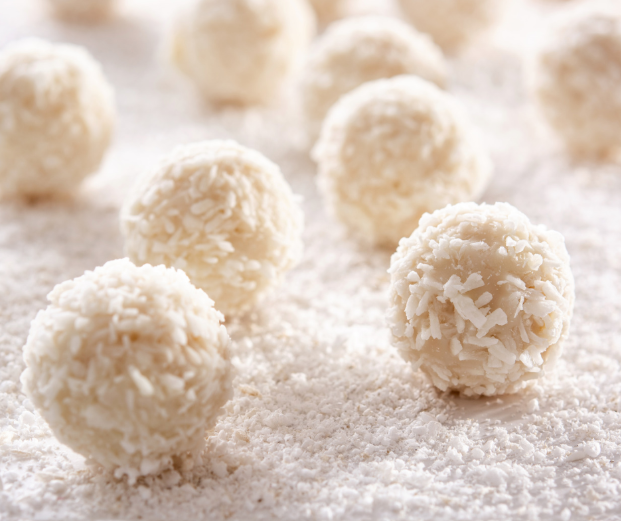
I want holiday food to feel special while still giving the body something useful. These little coconut snowballs are exactly that kind of treat. They are rich, chewy, naturally sweet, and incredibly easy to make. No baking. No refined flour. No complicated list of ingredients. Just real, whole-food, plant based ingredients transformed into a bite-sized dessert that looks right at home on a holiday platter.
I love recipes like this, because they prove that “healthy” does not have to mean boring.
If you love finding ways to make desserts more nourishing without sacrificing that rich, satisfying texture, explore my collection of healthy desserts without refined sugar.

What Are Holiday Coconut Snowballs Made Of?
These little treats have a rich, nutty texture from pecans and cashews, with coconut adding a soft, slightly chewy quality. Vanilla and almond extract give them that unmistakable comforting flavor, and ginger adds a little warmth underneath it all. The natural sweetness is gentle which lets the nuts and coconut shine.
You can keep them light and coconutty or turn them into a chocolate holiday treat with cacao or carob. Rolled in coconut and shaped into little balls, they look festive enough for a holiday table without needing frosting, sprinkles, or a sugar overload.

How Do You Make Holiday Coconut Snowballs?
This is one of those recipes that feels almost too easy. Everything starts in the food processor, where the pecans, coconut, cashews, extracts, ginger, sweetener, and coconut come together into a soft dough.
The trick is to pay attention to the texture. If the mixture gets too soft or gooey, a little more coconut brings it back into shape. Once the dough is workable, transfer it to a bowl and give it a quick mix with your hands. This is the fun part.
Roll the dough into little balls and coat them with coconut, or press the mixture into festive molds. For a chocolate version, add cacao or carob and a little chocolate stevia, then chill the finished treats in the freezer until firm.
How Do You Customize This Recipe?
There are several ways to make these your own without changing the basic character of the recipe.
Make them chocolate-covered. Mix cacao or carob into the dough, then add a little chocolate stevia for a richer, more decadent bite.
Turn them into holiday shapes. Press the dough into small stars, hearts, trees, or other festive molds instead of making traditional balls.
Give them a snowy finish. Roll them generously in coconut for that classic snowball look, or press just a light dusting of coconut onto the outside for a more delicate finish.
Warm them up. Increase the ginger or add a touch of cinnamon for a cozy holiday-spice version.
Sneak in some green. Add a small amount of spirulina, kale powder, or broccoli sprout powder for an unexpected boost of plant compounds without changing the basic recipe.
Make a holiday sampler. Create a platter with plain coconut snowballs, chocolate bites, and festive molded shapes. Same basic dough, but suddenly it looks like you spent much more time in the kitchen.
Want to make a whole holiday dessert platter? Pair these snowballs with my Gluten-Free Gingerbread Cookies for another festive, low-glycemic treat.

How Do These Ingredients Support Blood Sugar Balance, Heart Health, and Hormones?
These treats combine ingredients that provide healthy fats, fiber, minerals, and beneficial plant compounds. From a functional nutrition perspective, the combination offers nutrients and phytochemicals involved in energy metabolism, cardiovascular health, inflammation, and cellular function, making these a nutrient-dense way to enjoy a holiday dessert.
Pecans
Pecans provide monounsaturated and polyunsaturated fats, fiber, minerals such as magnesium and zinc, plant sterols, and polyphenols. Their combination of fat and fiber slows the digestion of the overall food, while the polyphenols contribute antioxidant and cell-signaling activity.
Pecan consumption has been shown to significantly reduce total cholesterol, LDL cholesterol, triglycerides, and even ApoB.
Coconut
Unsweetened coconut contains fiber, minerals, and saturated fat with plant compounds such as phenolic compounds.
Because coconut is calorie-dense, it is worth keeping the portion in perspective. Coconut is not a free pass simply because it is a whole food. In this recipe, its role is to provide texture, richness, and nutrients while replacing ingredients such as refined flour and added sugar.
Cashews
Cashews contribute phytosterols, polyphenols, flavonoids, tocopherols, and other bioactive compounds. These compounds can influence oxidative stress and inflammatory signaling, while phytosterols interact with cholesterol metabolism. Cashews contain flavonoids such as catechin, epicatechin, and epigallocatechin, with carotenoids and other plant compounds that contribute to their antioxidant activity.
Chronic inflammation, oxidative stress, and impaired metabolic signaling can interfere with normal hormone signaling. Daily cashew consumption has been associated with lower serum insulin and a lower LDL-to-HDL cholesterol ratio, while HOMA-IR also decreased within the cashew group. Their combination of minerals, healthy fats, and bioactive plant compounds makes them an interesting food for supporting the metabolic environment in which healthy hormone signaling occurs.
Ginger
Ginger contains bioactive compounds including gingerols and shogaols that have been studied for their effects on inflammation, oxidative stress, and glucose metabolism. Even though this recipe uses a small culinary amount rather than a concentrated ginger supplement, ginger adds more than flavor.
Ginger supplementation has been shown to reduce fasting blood glucose, HbA1c, triglycerides, and LDL cholesterol, and earlier research has also reported reductions in inflammatory markers such as hs-CRP, TNF-?, and IL-6, although the authors noted limitations in the quality of the available trials.
Cacao or Carob
If you make the chocolate version, cacao adds cocoa flavanols and other polyphenols that have been studied for their effects on vascular function and blood pressure. Studies have found that cocoa flavanol intake modestly reduced both systolic and diastolic blood pressure and improved measures of vascular function, including flow-mediated dilation.
Carob offers a naturally sweet, cocoa-like alternative without the same caffeine and theobromine profile as cacao. Carob is also rich in insoluble fiber, polyphenols, and a naturally occurring inositol compound being studied for its role in insulin signaling and glucose metabolism. Whichever you choose, remember that the optional chocolate ingredients add flavor and plant compounds.

You can make a festive holiday dessert without turning your kitchen into a bakery or your body into the cleanup crew. Keep a batch in the freezer, pull them out when company arrives, and you have a rich, little treat ready to go.
Apple Cinnamon Green Smoothie Recipe
Equipment
- 1 High Speed Blender
- 1 knife
- 1 cutting board
Ingredients
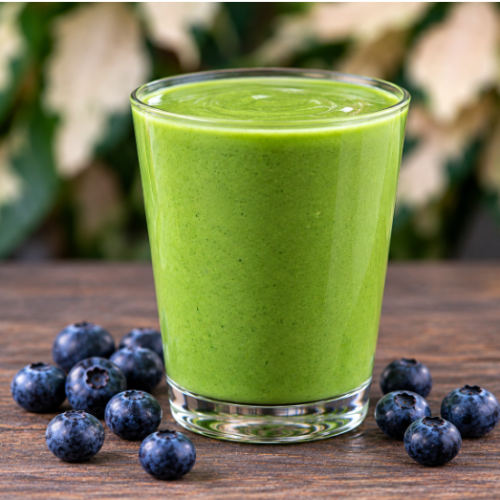
- 1 head bok choy
- 1 piece green apple
- 1 cup blueberries
- ½ cucumber
- 1 teaspoon cinnamon
- 1 pinch cardamom
- Water as needed for desired consistency
Instructions
- Add all ingredients to a high-speed blender and blend until smooth. Add water as needed to reach your preferred consistency.
Notes
Nutrition
Where Can You Find This and Other Nutritious and Delicious Recipes Like It?
This recipe is from Dr. Ritamarie’s Healing Kitchen episode, Thriving Throw-Togethers: Quick and Easy Foods for Optimal Well-Being, found inside the Unstoppable Health Community.
Ready to go deeper? The Unstoppable Health Community gives you everything you need to heal, rebalance, and thrive, including a curated library of food-as-medicine tools, personalized wellness assessments, and live monthly sessions with functional health experts. Join the Unstoppable Health Community Today

0 Comments