
There was a time when I thought a salad was automatically healthy.
I’d fill my plate with greens, drizzle something on top, and feel like I’d checked the box. Years ago, when I moved away from living on ice cream and processed food, salads became my go-to. They were my rebellion against the standard American diet. They were my reset.
Here’s what I learned as I dug deeper into metabolic health and inflammation: a salad can be a side dish, or it can be a therapeutic intervention.
After my mom’s sudden heart attack at 56, I became obsessed with that difference. Not obsessed in a fearful way, but I was focused, and I turned to strategic, intentional foods.
This low glycemic Tahini Rainbow Salad is built with that in mind. Every ingredient has a job.

What Is Tahini Rainbow Salad Made Of?
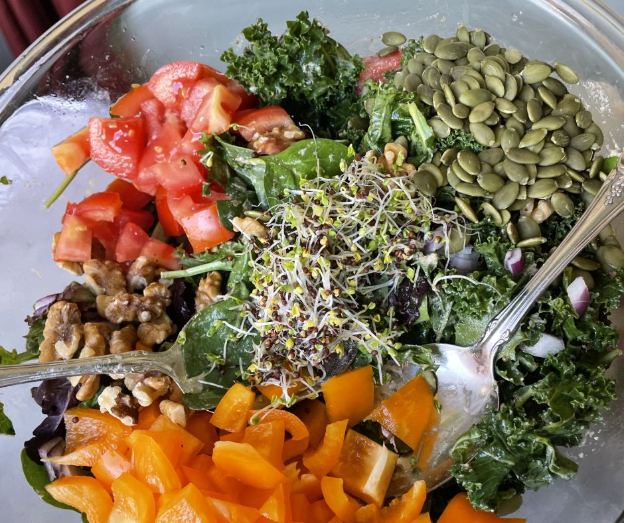
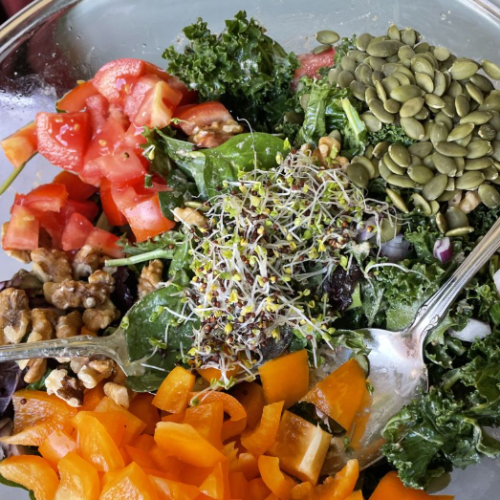
This salad with dairy free dressing is bright, creamy, and layered in texture. The kale becomes tender after being massaged with lemon and salt. The tahini dressing is smooth, tangy, and herbaceous with just enough acidity from apple cider vinegar to wake everything up.
Sweet orange bell peppers add crunch, and tomatoes add some sweet juiciness. Purple onion gives a bit of a bite. Walnuts and pumpkin seeds add richness and comfort. A handful of fresh sprouts gets scattered over the top for a peppery display that makes the whole bowl feel alive.
It’s colorful and hearty without feeling heavy.

How Do You Make Tahini Rainbow Salad?
First, the dairy free, sugar free dressing comes together in a jar. Just add tahini, apple cider vinegar, lemon, herbs, and just enough water to create that pourable, creamy texture. Shake it, and it transforms into something that tastes like it belongs in a restaurant.
Then the kale gets attention. A squeeze of lemon and a pinch of salt, and you massage it until it softens and wilts. This step changes everything. It makes the kale tender and easier to digest.
After that, the bowl fills with color from spinach or mixed greens, bright peppers, tomatoes, and onion. The dressing coats every leaf. Walnuts and pumpkin seeds go on top for crunch and anti-inflammatory fats.
The result is a metabolic upgrade.
How Do You Customize This Recipe?
This salad adapts easily to different needs and tastes:
- Want more protein? Add more seeds, baked tofu, some lentils or lupini beans, or hemp seeds.
- Looking for lower oxalate options? Use lacinato kale and swap spinach for lower-oxalate greens like bok choy or Napa cabbage.
- Avoiding sesame? Replace tahini with sunflower seed butter.
- Want extra crunch? Add shredded carrots, jicama, or radish.
- No kale? Swap in shredded Brussels sprouts, collards, or cabbage.
- Want extra detox and anti-inflammatory support? Add more broccoli or radish sprouts for a concentrated dose of sulforaphane and glucosinolates.
If you are looking for more salad ideas, check out this Seaweed Sprout Sauerkraut Salad. Looking for more dressing ideas? Look at the 5 Ingredient Green Salad Dressing.

How Do These Ingredients Help With Blood Sugar Balancing, Heart Health, and Other Hormones?
The leafy greens provide polyphenols and nitrates that support endothelial function. The seeds add magnesium, zinc, selenium, and healthy fats required for hormone production and receptor function. The vinegar and lemon help blunt post-meal glucose response. The herbs add even more antioxidant and immune-modulating compounds.
These ingredients influence NF-?B signaling, cytokine production, insulin sensitivity, lipid metabolism, gut microbiome diversity, and estrogen clearance. This is food designed to calm inflammation while supporting endocrine balance.
Kale
Kale is rich in flavonoids such as quercetin and kaempferol, vitamin C, beta-carotene, and even some alpha-linolenic acid. These compounds reduce oxidative stress and help regulate inflammatory pathways.
Its fiber and polyphenols also influence gut microbiome composition, increasing microbial diversity and supporting short-chain fatty acid production like butyrate. This is associated with improved insulin sensitivity, better glucose handling, and modulation of estrogen metabolism.
Apple Cider Vinegar
Apple cider vinegar contains acetic acid and polyphenols that may slow gastric emptying and blunt post-meal glucose spikes. Some trials have shown improvements in glucose tolerance and insulin sensitivity when vinegar is consumed with meals.
It also shows mild anti-inflammatory activity through effects on cytokine production and oxidative stress. While not a stand-alone therapy, it supports metabolic regulation within a larger anti-inflammatory pattern.
Tahini
Tahini has monounsaturated fats and sesame lignans such as sesamin and sesamol. These compounds reduce oxidative stress and modulate inflammatory pathways in preclinical studies.
Sesame lignans also influence lipid metabolism through PPAR activation and may improve LDL and triglyceride levels. The healthy fats stabilize blood sugar and provide substrates necessary for steroid hormone production.
Lemon
Lemon juice is rich in vitamin C and citrus flavonoids that reduce oxidative stress and support endothelial lining. Vitamin C is also needed in adrenal function and immune regulation.
Citrus compounds also help to improve post-prandial glucose handling and support liver detoxification pathways involved in estrogen clearance.
Spinach
Spinach contains carotenoids, vitamin C, magnesium, potassium, and alpha-lipoic acid. These compounds support antioxidant defenses and improve insulin sensitivity.
Leafy greens like these are associated with improved endothelial function and lower diabetes risk, likely due to nitrate content and mineral support for vascular and metabolic regulation.
Orange Bell Pepper
Orange bell peppers are exceptionally high in vitamin C and carotenoids. These antioxidants reduce oxidative stress and down-regulate inflammatory mediators.
Their fiber and phytonutrients support glycemic stability and lipid regulation, contributing to lower cardiometabolic risk.
Tomato
Tomatoes are rich in lycopene and other antioxidants that reduce inflammatory cytokines and oxidative damage. Lycopene improves antioxidant defenses in adipose tissue, which is relevant to obesity-related endocrine disruption.
Regular tomato intake is associated with reduced cardiovascular and metabolic disease risk through improved lipid and inflammatory markers.
Purple Onion
Purple onions are high in quercetin and anthocyanins which inhibit inflammatory mediators and support vascular health.
Their prebiotic fibers feed beneficial gut bacteria, influencing systemic inflammation and improving insulin sensitivity.
Walnuts
Walnuts are rich in alpha-linolenic acid and polyphenols that suppress inflammatory signaling and reduce oxidative stress.
Clinical trials show walnut intake improves lipid profiles, insulin sensitivity, endothelial function, and gut microbiome diversity, supporting cardiometabolic and endocrine balance.
Pumpkin Seeds
Pumpkin seeds add magnesium, zinc, antioxidants, and healthy fats that reduce oxidative stress and support hormone production.
Magnesium improves insulin sensitivity and blood pressure regulation, while zinc supports reproductive hormone balance and immune function.
Sprouts
Sprouts, particularly broccoli and radish varieties, are concentrated sources of glucosinolates and sulforaphane precursors. These compounds activate the Nrf2 pathway, increasing phase II detoxification enzymes and reducing NF-?B–driven inflammatory signaling. This supports cellular antioxidant defense and lowers cytokines associated with metabolic inflammation.
From an endocrine perspective, sulforaphane has been linked to improved insulin sensitivity, lipid regulation, and enhanced estrogen metabolism through hepatic detox pathways. Their fiber and phytonutrient density also support microbiome balance.

This salad provides fiber, antioxidants, essential fatty acids, mineral cofactors, and detox-activating phytochemicals all in one bowl.
It’s simple, colorful, delicious, and carries metabolic leverage.
Tahini Rainbow Salad
Equipment
- 1 large bowl
- 1 mason jar
- 1 knife
- 1 cutting board
Ingredients
- 1 bunch kale leaves, washed, destemmed, torn
- ¼ cup water
- ¼ cup apple cider vinegar
- ¼ cup tahini
- 1 juiced lemon
- ½ tsp Himalayan or sea salt
- 2 tsp Italian seasoning
- 4 cups baby spinach or mixed greens
- 1 pc orange bell pepper, diced
- 1 pc tomato, chopped
- ¼ small purple onion, minced
- ¼ cup walnuts
- ¼ cup pumpkin seeds
- 1 handful of Sprouts (broccoli, radish, any mix)
Instructions
- Combine tahini, water, apple cider vinegar, lemon juice, and herbs in a jar and shake until smooth.
- Massage lemon juice and salt into kale until softened.
- Add remaining vegetables and greens. Pour dressing over salad and toss.
- Top with walnuts, pumpkin seeds, and sprouts.
Nutrition
Where Can You Find This And Other Nutritious And Delicious Recipes Like It?
This recipe is from Healing Kitchen Episode: Easy Family Dinner Night with Guest Chef Jen Whitmire, found in our Unstoppable Health community. You can find out more about Jen at wholisticjen.com.
Ready to go deeper? The Unstoppable Health Community gives you everything you need to heal, rebalance, and thrive, including a curated library of food-as-medicine tools, personalized wellness assessments, and live monthly sessions with functional health experts. Join the Unstoppable Health Community Today
For more recipes like this, explore our recipe books inside the Unstoppable Health Hormone Harmony Marketplace.



0 Comments